
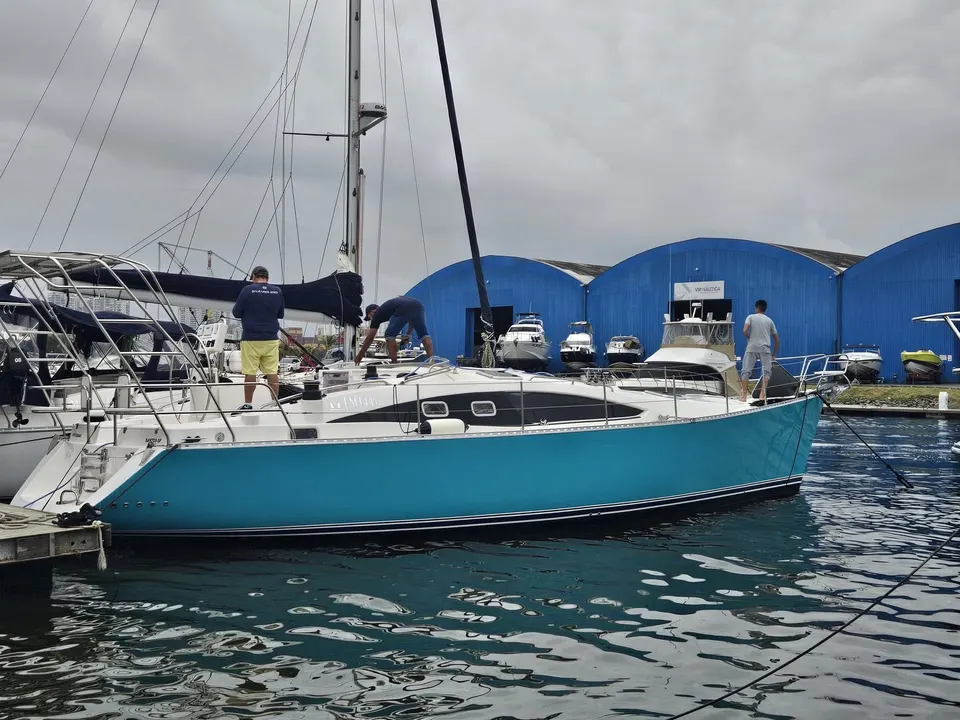
Anyone looking at sailboats for sale finds two paths. One is a used boat, which already exists and can sail right away. The other is a new sailboat, built to order. Both can work out.
The difference lies in what you need to check, what you can choose and when you start sailing. This guide compares the two options, point by point.
Summary: used or new built to order
| Point | Used sailboat | New sailboat built to order |
|---|---|---|
| When you sail | Soon after survey and adjustments | After construction |
| Hull and structure | Depend on previous use and maintenance | You follow the construction |
| History | Has to be researched | Starts with you |
| Equipment | Comes with the boat, of varying ages | Chosen for your use |
| Layout | Whatever the boat already has | Adjusted to your profile |
1. Hull and structure
On a used boat, the hull is the first thing to check. Haul the boat out and take a close look at the hull, keel and rudder. Look for signs of osmosis, cracks, poor repairs and grounding damage. Inside, check the frames, reinforcements and keel attachment.
Marcelo bought a 1984 Cruiser 31 as its third owner. He explains what he did:
"Before buying, I asked for the boat to be hauled out for inspection."
He checked the keel, the rudder shaft and the hull. And he reports that he found "not the slightest sign of osmosis or cracks in the hull."
With a new sailboat, you do not have to guess how the hull was built. On MJ boats, the hull is solid fiberglass, about 2 inches thick, built by hand lay-up. The first layer uses vinyl ester resin, to protect against osmosis. The sandwich reinforcement goes only above the waterline, after the hull is finished. Solid wood frames and longitudinal reinforcements complete the structure. Learn more about the shipyard.
2. The boat's history
A used boat carries the story of its previous owners. Ask how it was used, where it was kept, whether it ran aground and what repairs it received. Ask for documents and maintenance records.
The MJ 38 DS Prosperus shows both paths. Captains Dri and JP ordered the boat and followed the build:
"During construction, we visited the shipyard every three months to follow the progress."
Later, Jacir bought Prosperus from them, already used. He met the previous owners, who were very fond of the boat. Today he says: "I have been living aboard for two and a half years and am very happy."
With a new boat, the history starts with you. The owner can follow the build closely and get to know every stage.
3. Refits and equipment to replace
Every used boat needs some investment after purchase. Sails, lines, standing rigging, batteries, electronics, upholstery and engine all have a service life. List what needs replacing and factor it in before closing the deal.
The structure is what decides whether a refit is worth it. Captain Décio bought a 2003 MJ 25 to restore. He describes the boat this way: "It had been abandoned and was in very poor general condition." And he adds:
"The hull, deck, fiberglass, and woodwork were structurally sound."
With a sound structure, the refit left the boat ready for new voyages.
With a new boat, the equipment is chosen for your use from the start. You define navigation, power and comfort according to your plan.
4. Customization
Buying used means accepting the layout the boat already has. Changing cabins, bathrooms or the galley later is usually expensive and not always possible.
When you order, the logic is reversed. Every MJ is built individually, tailored to the owner's profile, needs and sailing style. The owner takes part in defining many details, such as the cabin configuration, interiors and equipment.
Claudio built two MJ 38s with the shipyard. He highlights "the freedom the shipyard gives owners to equip and individually customize their interiors."
5. Time until you sail
Here the used boat has the advantage. After the survey and adjustments, you can go sailing. A new boat has to be built, and the timeline depends on the model and the project.
Some people combine both paths. That is how Captain Décio's MJ 25 came into the story. When he ordered the MJ 38 DS Kailani, he did not want to be without a boat. The decision was simple: "We decided to buy one while waiting for the new one."
When ordering an MJ makes sense
Ordering a new sailboat makes sense when:
- you know how you want to sail and want a boat tailored to that use;
- you have not found a used boat with the right layout and equipment;
- you want to follow the construction and get to know every stage;
- you plan to keep the boat for many years and start its history from scratch.
A used boat makes more sense when you want to sail soon and have found a boat with a sound structure and a known history. It also helps if the existing layout suits your crew.
If size is the question, see how to choose between 34, 38, 44 and 60 feet and explore the models. To hear from people who already sail, read the testimonials or browse the gallery.
Read also
Compare with a new MJ
Looking at sailboats for sale and want to compare them with an MJ built for you? Talk to the team on WhatsApp. You can also schedule a visit to the shipyard in Jacupiranga, São Paulo state, Brazil, and see up close where MJ boats are built.
Frequently asked questions
Is it better to buy a new or used sailboat?
It depends on your timeline, your budget for refits and how much you want to customize. A used boat lets you sail sooner. A new boat built to order lets you choose the layout and equipment and follow the construction.
What should I check before buying a used sailboat?
Haul the boat out to inspect the hull, keel and rudder. Look for signs of osmosis and cracks, and check the internal structure, engine, rig, sails and paperwork.
Can I follow the construction of an MJ sailboat?
Yes. Every MJ is built to order at the shipyard in Jacupiranga, São Paulo state, Brazil. The owner takes part in defining many details and can follow the build closely.
How is an MJ sailboat hull built?
In solid fiberglass, about 2 inches thick, by hand lay-up. The first layer uses vinyl ester resin to protect against osmosis. Above the waterline, the hull receives a fiberglass sandwich reinforcement.
 Guided shipyard tour
 Talk with our technical team
 Watch your project take shape